By ÍNDICE | Property Management & Real Estate Advisory
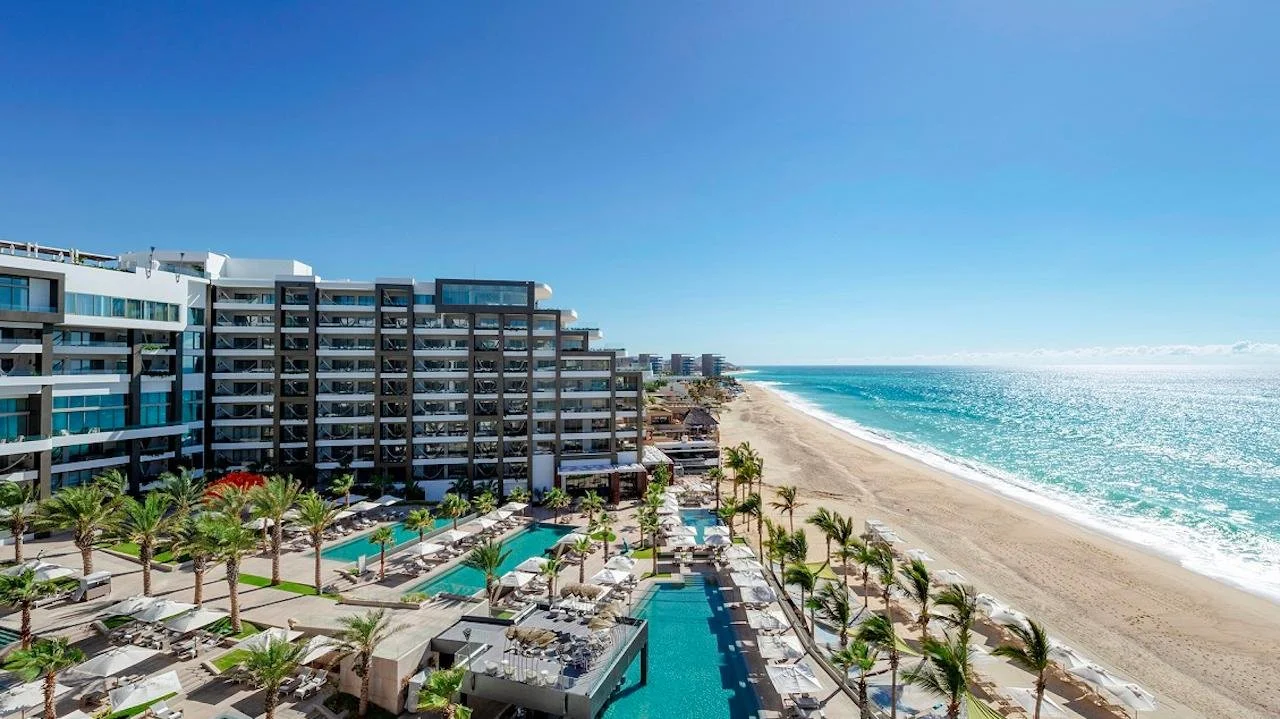
Owning a beachfront condominium or vacation home in Mexico offers an attractive lifestyle and an opportunity to invest in one of the country's most desirable real estate markets.
Destinations such as Los Cabos, Puerto Vallarta, Cancún, Playa del Carmen, and the Riviera Maya attract property owners from the United States, Canada, and around the world.
However, coastal properties face environmental conditions that can significantly accelerate the deterioration of buildings, equipment, and infrastructure.
Humidity, airborne salt, intense sunlight, high temperatures, heavy rainfall, and hurricanes create maintenance challenges that are often underestimated, particularly by owners who live outside Mexico.
A property that looks perfectly maintained during a visit may be experiencing corrosion in its mechanical equipment, deterioration in waterproofing systems, or moisture problems that are not immediately visible.
For this reason, preventive maintenance should be considered an essential part of professional property management and long-term asset preservation.
1. Why Coastal Properties Require Specialized Maintenance
Coastal environments are particularly demanding on buildings and their mechanical systems.
Unlike properties located inland, buildings near the ocean are continuously exposed to airborne salt particles, high humidity, and changing weather conditions.
These environmental factors affect several critical components:
Metal structures and equipment
Salt exposure accelerates corrosion in metal railings, exterior fixtures, fasteners, electrical enclosures, air-conditioning components, pumps, and other mechanical equipment.
Even stainless steel components can deteriorate if the wrong grade is used or if they are not properly maintained.
Exterior finishes and coatings
Paint, sealants, protective coatings, and other exterior materials are exposed to ultraviolet radiation, wind-driven rain, and salt deposits.
Without periodic inspection and appropriate maintenance, these materials can deteriorate faster than expected.
Waterproofing and drainage
Heavy rainfall, roof exposure, clogged drains, and deteriorated waterproofing systems can result in water infiltration, leaks, and damage to interior finishes.
Air-conditioning and ventilation systems
High temperatures and humidity increase the demand on cooling systems. Condensate drains, filters, coils, electrical connections, and outdoor units require regular attention.
These conditions make a reactive maintenance strategy particularly expensive. Waiting until equipment fails or water enters a building can turn a relatively minor maintenance issue into a major repair.
2. Salt Corrosion: One of the Most Overlooked Risks
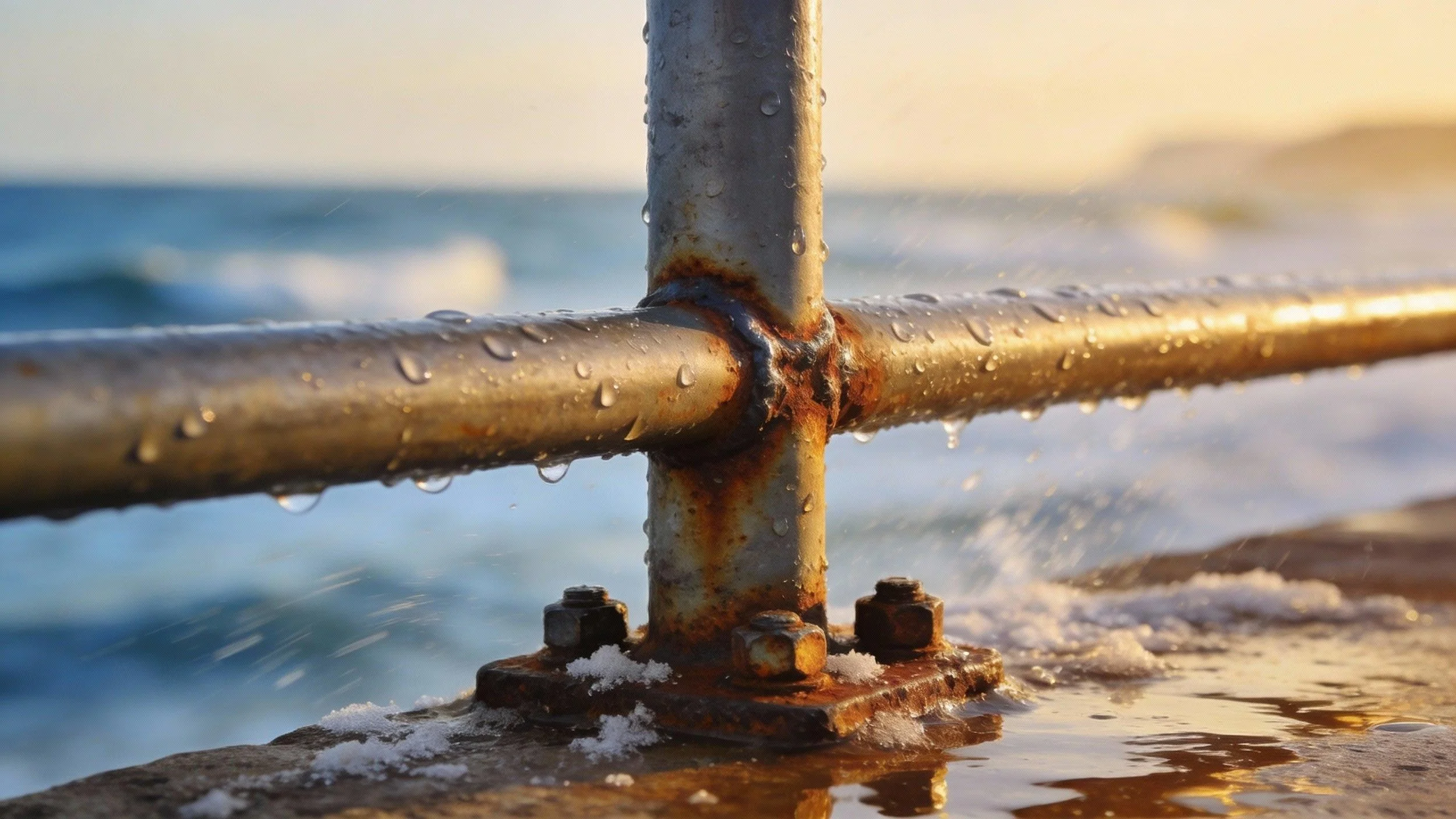
Salt carried by coastal air is one of the most persistent threats to buildings located near the ocean.
It can accumulate on exposed surfaces and accelerate the corrosion of metals and electrical components.
In condominium developments, this can affect:
Exterior railings, gates, and metal doors.
Pool pumps and mechanical equipment.
Air-conditioning condensers and electrical connections.
Elevators and exposed mechanical components.
Exterior lighting and electrical enclosures.
Fasteners, hinges, locks, and structural accessories.
A professional maintenance program should include regular visual inspections, appropriate cleaning procedures, corrosion monitoring, and protective treatments suitable for each material.
Simply repainting a corroded surface without addressing the underlying deterioration does not solve the problem.
The correct approach is to identify the cause, evaluate the condition of the material, and apply an appropriate repair or protective system.
3. Humidity and Water Infiltration: Small Problems Can Become Expensive
In tropical and coastal regions, humidity is a constant concern.
When moisture enters a building through roofs, façades, windows, balconies, or plumbing systems, it can cause progressive damage.
Common warning signs include:
Paint bubbling or peeling.
Dark spots on ceilings and walls.
Musty odors in enclosed spaces.
Deterioration of wood finishes and cabinetry.
Corrosion around windows and metal frames.
Water stains near air-conditioning installations.
Mold and moisture problems are particularly important in properties that remain unoccupied for extended periods.
A property manager should establish periodic inspection procedures, verify that drainage systems are functioning correctly, and coordinate specialized inspections when signs of water infiltration appear.
It is also important to understand that simply running an air-conditioning system continuously is not always the most effective solution. Humidity control should be based on the building's ventilation, occupancy, equipment, and environmental conditions.
Early detection is essential.

4. Hurricane Preparedness: Maintenance Before, During and After the Storm
Hurricanes and tropical storms represent a major operational risk for properties in Mexico's coastal destinations.
A professional condominium management team should not wait until a storm is approaching to begin preparing the building.
Hurricane preparedness must be integrated into the property's annual maintenance and emergency management plans.
Before hurricane season
A comprehensive inspection should include:
Roofs, waterproofing, and drainage systems.
Exterior windows, doors, and glazing.
Façades, balconies, and loose architectural elements.
Roof-mounted equipment and mechanical installations.
Emergency generators and backup power systems.
Fire protection and emergency equipment.
Stormwater drainage and sump pumps.
Trees, landscaping, and loose outdoor furniture.
The management team should also review emergency contacts, contractor availability, insurance documentation, emergency procedures, and the building's hurricane response plan.
When a storm approaches
The priority shifts from routine maintenance to risk reduction and occupant safety.
Depending on official instructions and the property's emergency plan, this may include securing loose objects, protecting vulnerable equipment, checking drainage systems, and implementing appropriate shutdown procedures.
Residents and owners should receive clear instructions through established communication channels.
After the storm
Once conditions are safe, the property should undergo a documented post-storm inspection.
The inspection should prioritize:
Roof and façade damage.
Water infiltration and flooding.
Electrical systems and equipment.
Elevators and mechanical installations.
Swimming pools and water treatment systems.
Structural elements requiring specialist assessment.
Landscaping and exterior facilities.
Photographs, inspection reports, repair estimates, and incident records are important for coordinating repairs and supporting insurance claims.
The objective is to identify damage early, prevent secondary deterioration, and restore normal operations safely.
5. A Preventive Maintenance Program: What Should Be Inspected?
An effective maintenance program should be based on the property's equipment, construction materials, environmental exposure, age, and operating requirements.
There is no universal maintenance schedule that applies to every condominium. However, a structured inspection plan provides a reliable starting point.
The following table illustrates key maintenance priorities for coastal residential developments.
Building systemMaintenance prioritiesRoofs and waterproofingInspect membranes, joints, drains, and signs of infiltrationFaçades and balconiesCheck cracks, coatings, sealants, railings, and corrosionAir conditioningClean filters and coils, inspect condensate drains and electrical componentsPumps and water systemsCheck pressure, leaks, vibration, seals, and operating conditionsSwimming poolsMonitor water quality, filtration, pumps, and heat pumpsElectrical systemsInspect connections, panels, grounding, and protective devicesElevatorsFollow manufacturer maintenance schedules and specialist inspectionsGeneratorsTest operation, batteries, fuel systems, and emergency readinessFire protectionVerify alarms, extinguishers, pumps, and required inspectionsDrainage systemsClear drains, inspect channels, and verify stormwater flow
Maintenance activities should be documented with dates, findings, photographs, corrective actions, and responsible personnel.
This creates a maintenance history that helps management identify recurring problems, anticipate replacement costs, and make better budget decisions.
6. The Financial Benefits of Preventive Maintenance
Preventive maintenance is sometimes perceived as an additional expense. In reality, it is an important financial management tool.
Consider a simple example.
A condominium identifies early signs of corrosion in exterior metal railings. The affected areas can be inspected, treated, and protected before the deterioration becomes widespread.
If the issue is ignored, corrosion may progress and eventually require replacement of larger sections, additional labor, and potentially more extensive repairs.
The same principle applies to waterproofing, air-conditioning equipment, water pumps, electrical systems, and other building infrastructure.
A properly managed maintenance budget should distinguish between:
Routine maintenance: Regular cleaning, inspections, adjustments, and servicing.
Corrective maintenance: Repairs required after a defect or equipment failure is identified.
Capital improvements: Larger investments involving replacement, modernization, or substantial rehabilitation of building systems.
This distinction allows condominium committees and owners to make more informed decisions about operating expenses, reserve funds, and long-term financial planning.
Good maintenance does not eliminate unexpected expenses, but it can reduce avoidable failures and improve the predictability of building operations.
7. Why Professional Property Management Makes the Difference
A maintenance calendar alone does not guarantee that a property will be properly maintained.
The real challenge is implementation.
Someone must coordinate inspections, supervise maintenance personnel, evaluate contractor proposals, monitor completed work, maintain records, and report relevant findings to the condominium committee.
For owners who live abroad, this operational oversight is especially important.
A professional property management company should provide:
A documented preventive maintenance program.
Defined inspection frequencies and responsibilities.
Supervision of internal maintenance personnel and external contractors.
Photographic evidence and maintenance reports.
Budget monitoring and expense control.
Follow-up on pending repairs and recurring issues.
Emergency preparedness and post-event inspection procedures.
Long-term recommendations for equipment replacement and capital improvements.
Technology can also improve the process through digital inspection checklists, maintenance records, photographic evidence, and centralized reporting.
The result is greater visibility into the property's actual condition, even when owners are thousands of miles away.
8. Protecting Your Property Starts Before Problems Appear
Coastal real estate in Mexico offers exceptional opportunities, but maintaining these properties requires a clear understanding of their environmental and operational challenges.
Humidity, salt corrosion, intense sunlight, and severe weather are not occasional inconveniences. They are permanent considerations in the life cycle of a coastal building.
A professional approach combines preventive maintenance, technical supervision, financial planning, documented inspections, and emergency preparedness.
For international property owners, this means greater confidence that their investment is receiving the attention it deserves.
At ÍNDICE | Administradora de Espacios, we believe that property management is about more than keeping a building operational. It is about preserving assets, improving operational efficiency, and creating sustainable residential environments through professional administration and continuous oversight.
Whether you own a condominium in Los Cabos, a vacation property in the Riviera Maya, or a residential development in Puebla, your property deserves a management strategy designed to protect its long-term value.
Don't wait for the next repair to discover what preventive maintenance could have protected.
Looking for professional property management in Mexico?
Contact ÍNDICE to discuss preventive maintenance planning, condominium administration, operational supervision, and long-term property preservation.
ÍNDICE | Administradora de Espacios
Email: contacto@indiceespacios.com